Waitangi Treaty Grounds: A Complete Guide to New Zealand’s Birthplace
I recently moved to New Zealand on a Working Holiday Visa, and almost everyone keeps telling me the same thing: you have to go to the South Island.
And honestly, I get it. I can’t wait to explore the South Island and see some of the World’s most incredible landscapes that make New Zealand so famous. But instead of rushing south, I decided to follow my gut and explore the North Island first.
I didn’t regret it.
The North Island has a completely different side of New Zealand to offer, especially when it comes to its history and Māori culture. And one of the places that stood out to me the most was Waitangi Treaty Grounds in the Bay of Islands.
If you want to understand more about New Zealand’s history and Māori culture, I genuinely think Waitangi Treaty Grounds deserves a place on your North Island itinerary.
In this guide, I’ll cover everything you need to know before visiting, from what to see and do, ticket prices and how long you should spend there.
What Is Waitangi Treaty Grounds?
Located in the Bay of Islands on New Zealand’s North Island, Waitangi Treaty Grounds is one of the most significant historical and cultural sites in New Zealand. It is best known as the place where Te Tiriti o Waitangi (the Treaty of Waitangi) was first signed on 6 February 1840 between representatives of the British Crown and Māori chiefs.
The signing of Te Tiriti was a defining moment in New Zealand’s history. Today, 6 February is commemorated every year as Waitangi Day, New Zealand’s national day. Because of this history, Waitangi is often described as the birthplace of the nation.
But here’s where things get complicated
There were two versions of the Treaty: one written in English and one in te reo Māori, and they did not mean exactly the same thing. Most Māori chiefs signed the Māori version, which had been translated from the English draft shortly before the signing. One of the biggest differences was the word used for what Māori were agreeing to give the Crown. The English version referred to “sovereignty,” while the Māori version used kāwanatanga, generally understood as governance.
At the same time, the Māori version promised chiefs tino rangatiratanga — essentially, the continued authority and control over their lands, villages and treasures. This created a huge gap between what the two versions appeared to promise. Many Māori rangatira who signed believed they were agreeing to British governance while retaining their own authority, rather than handing over absolute sovereignty.
Were the Māori deliberately misled? The differences between the English and Māori versions of the Treaty are so significant that it’s hard not to ask whether Māori rangatira truly understood what they were agreeing to. Actually, some historians have questioned whether the differences in translation were simply a mistake — or whether the Crown knew exactly what it was doing.
So while the Treaty is often presented as the document that founded modern New Zealand, its signing also marked the beginning of a deeply complicated relationship between Māori and the Crown — one that would involve land loss, broken promises and decades of conflict and grievances.
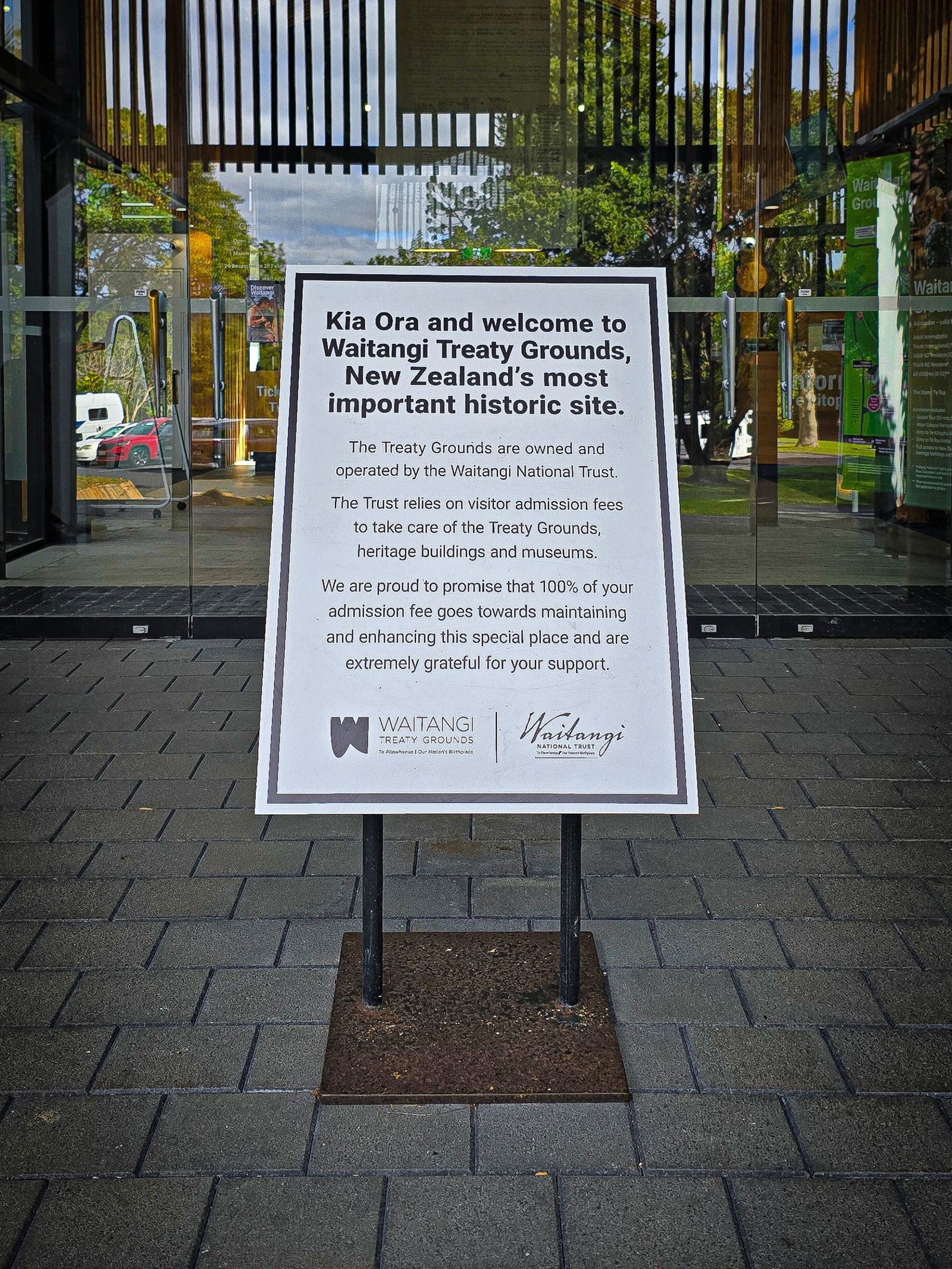
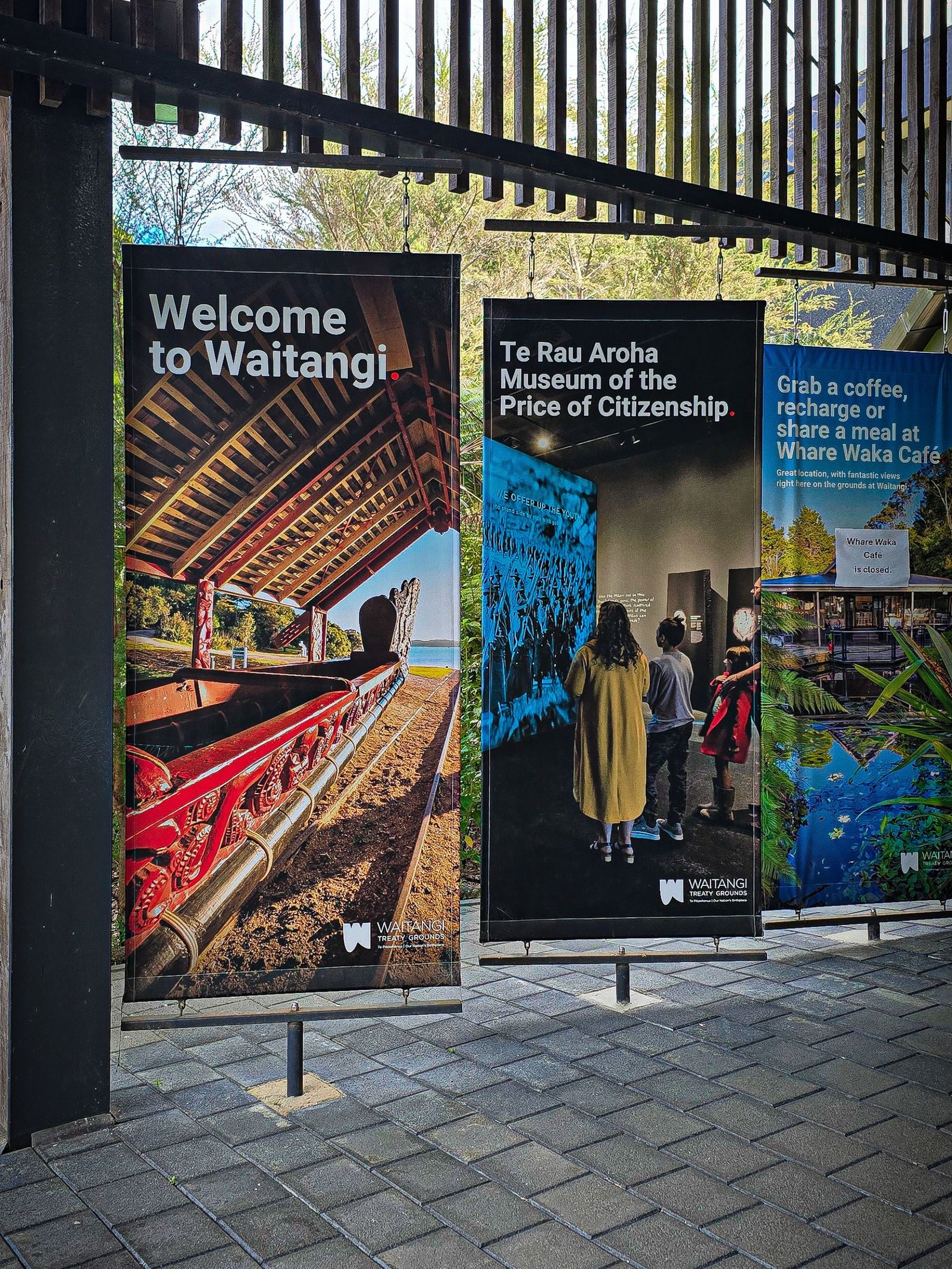
The Waitangi Treaty Grounds are still such a hidden gem, even though it’s considered New Zealand’s most important historic site
💡 Did you know?
Waitangi Treaty Grounds is one of New Zealand’s most important historical sites — yet it still seems to fly under the radar for many international travellers. Only around 160,000 people visit the grounds each year, unlike the millions of tourists who head to New Zealand’s famous landscapes and attractions. Somehow, Waitangi often doesn’t make it onto the average visitor’s itinerary. And honestly, I think that’s such a shame.
Today, the Waitangi Treaty Grounds is much more than a historic site marking where several important documents were signed. The grounds encompass historic buildings, museums, Māori meeting houses, traditional carvings and one of New Zealand’s most impressive collections of ceremonial waka, offering visitors a chance to explore the history and culture surrounding these pivotal moments in the country’s past.
Why Visit Waitangi Treaty Grounds?
If you’re travelling around New Zealand, it’s easy to focus almost entirely on the scenery. There are so many mountains to hike, lakes to admire and beaches to explore. Honestly, I totally get it. But I think one of the best ways to make a trip through New Zealand more meaningful is to take some time to understand the history and culture behind the country you’re travelling through.
That’s what made my visit to Waitangi Treaty Grounds so worthwhile.
Going there didn’t feel like simply visiting a historic place. More than that, it gave me a much better understanding of the relationship between Māori and the British Crown, and why the Treaty remains such an important — and sometimes deeply debated — part of New Zealand’s history today.
But perhaps one of my biggest takeaways from visiting Waitangi was realising that New Zealand’s North Island is so underrated.
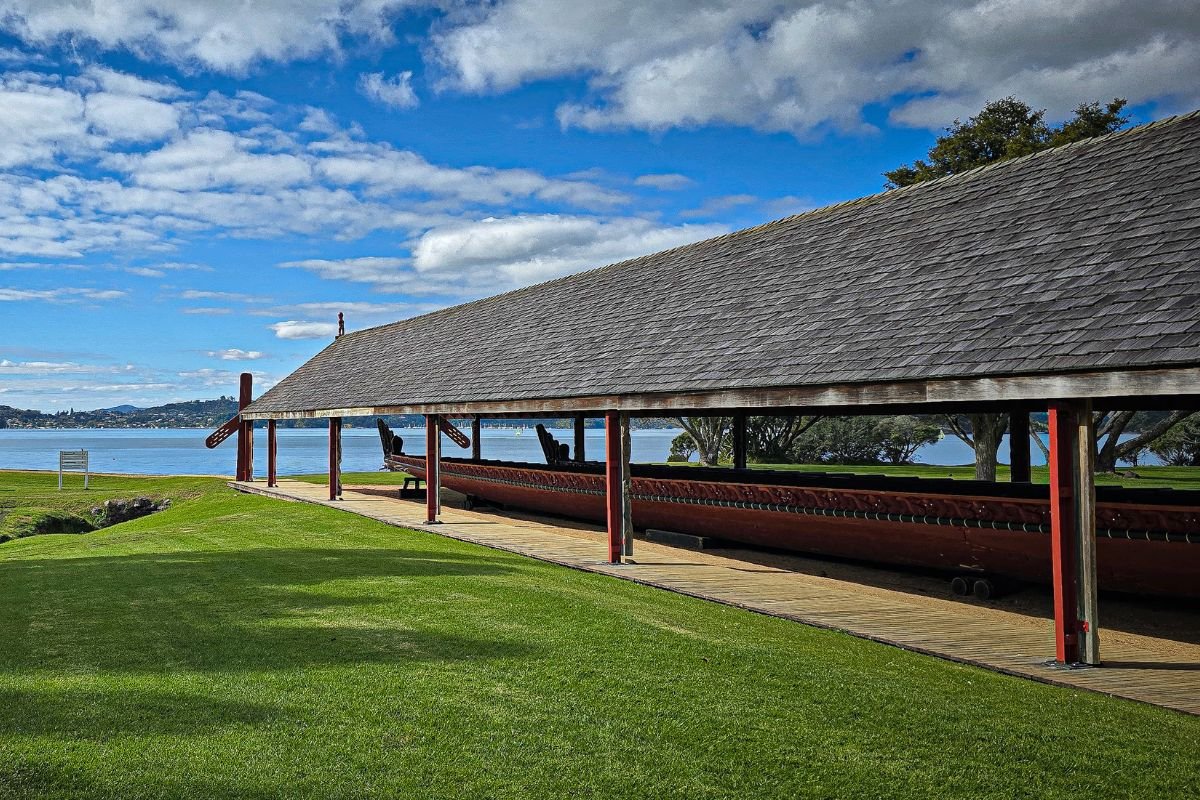
There are still so many hidden gems on New Zealand’s North Island and the Waitangi Treaty Grounds is one of them
Before coming to New Zealand, I had always associated this country with the dramatic landscapes of the South Island. And while the South Island absolutely deserves the hype, my time in the North Island made me realise that there is a completely different side of New Zealand here — one that is rich in history, Māori culture and fascinating places that don’t always receive the same attention.
And I’ll be honest: if you’re particularly interested in Māori culture and history, I think you’ll get much more out of travelling around the North Island. Even though the South Island has some of New Zealand’s most beautiful landscapes, the North Island is where the Māori culture is.
If, like me, you’re curious about Māori culture and want to understand more about the history of the country you’re travelling through, don’t make the mistake of thinking New Zealand is all about the South Island. The North Island deserves far more attention — and Waitangi is proof of that.
9 Things to See and Do at Waitangi Treaty Grounds
You might be thinking: “I’m not really a museum person — is Waitangi still worth visiting?” Absolutely.
While there are several excellent museums there, Waitangi Treaty Grounds is much more than museums and historical exhibits. So even if museums aren’t usually your thing, I would 100% still put Waitangi Treaty Grounds on your New Zealand itinerary.
Here are the highlights you shouldn’t miss:
1. Take a Guided Tour
All visitors to Waitangi Treaty Grounds can join a free guided tour around the site, and I highly recommend doing it. My guide was a young Kiwi who had such an impressive knowledge of Waitangi and New Zealand history in general. Listening to his stories and explanations as we walked around the grounds really brought the place to life for me.
The tour takes around 45 minutes and gives you a great introduction to the history, people and events that make Waitangi such an important place in New Zealand. I found it was the perfect way to start my visit before exploring the rest of the grounds on my own.
💡 My tip: Try to time your arrival so you can join the guided tour at the beginning of your visit. Starting with the tour before exploring the museums gives you the perfect introduction to Waitangi and its history, making it much easier to understand and appreciate everything you’ll see afterwards.
2. See the Giant Waka by the Water
The first place we stopped with our guide was down by the water, where you can see the enormous traditional waka. And honestly, seeing them up close was quite impressive.
The largest one, Ngātokimatawhaorua, is 35 metres long, making it the world’s largest ceremonial waka. It takes up to 80 people to paddle it and it is still launched into the Bay of Islands every year for Waitangi Day celebrations.
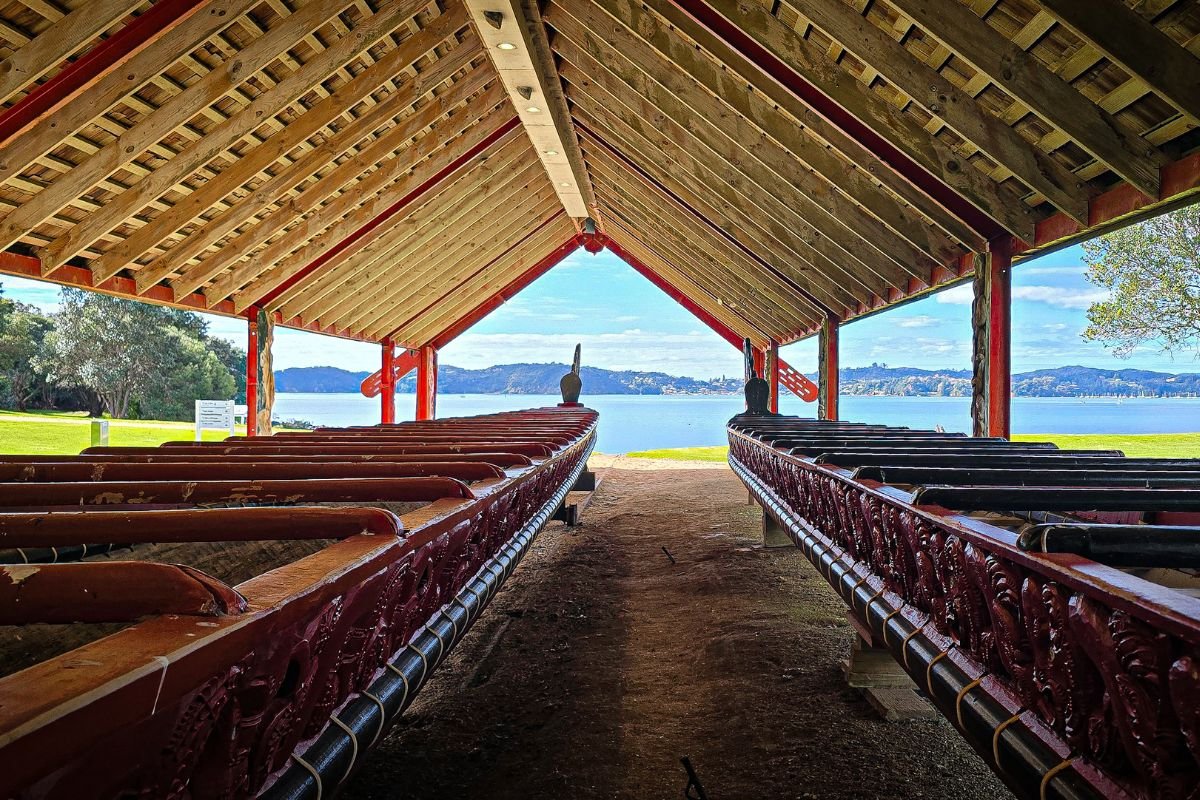
Seeing these giant waka is definitely a highlight at Waitangi
Our guide also told us more about how these waka were traditionally used and the incredible skill required to build and navigate them. Hearing these stories while standing right beside such a massive canoe made it much easier to appreciate its cultural significance.
Even if you’re not particularly interested in boats or Māori history, I’d still recommend walking down to the water to see them — you really don’t realise how interesting they are until you’re standing next to one!
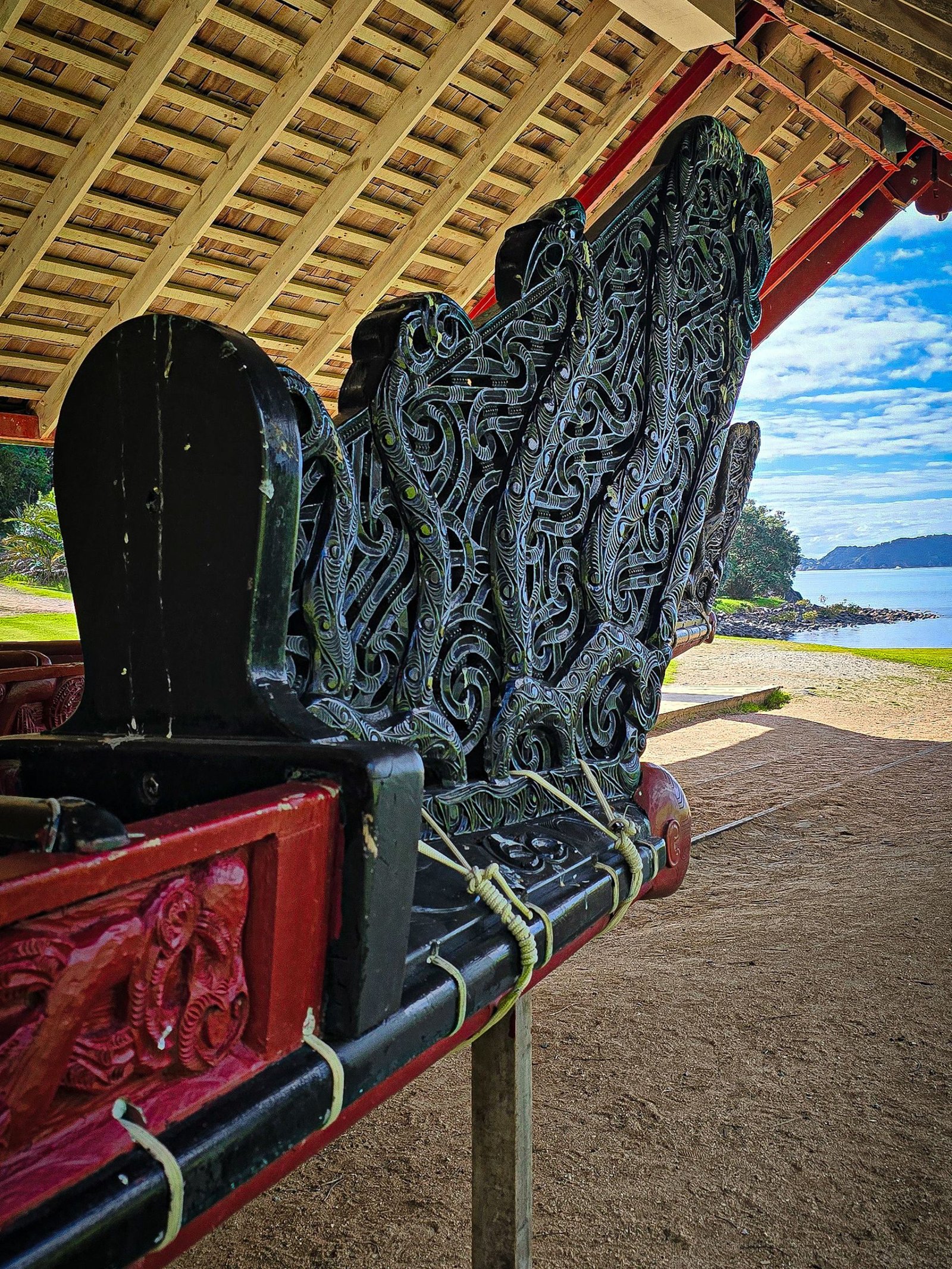
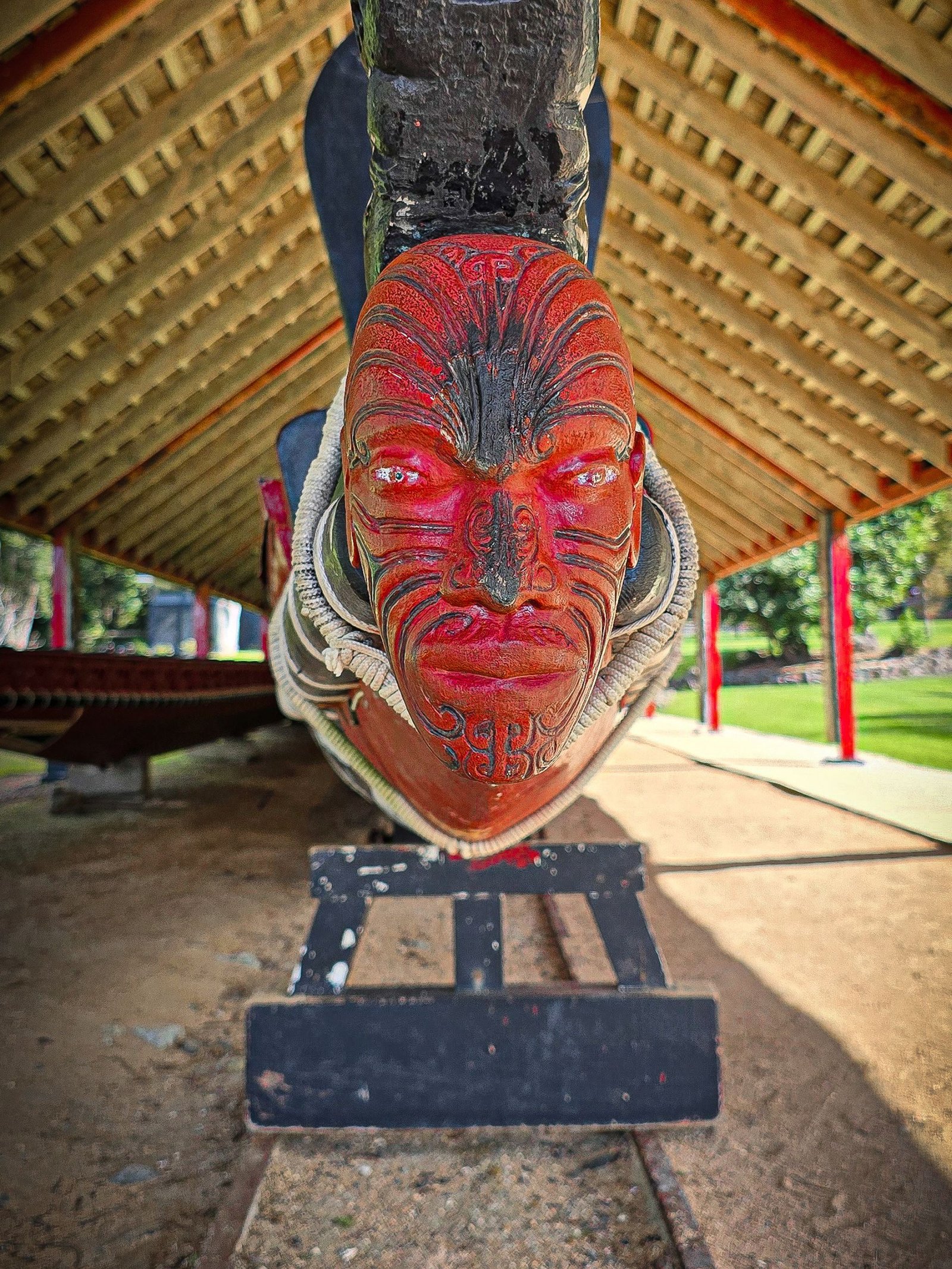
Just look at all these details
3. See the Flagstaff
Our next stop on the tour was the flagstaff, which stands on the spot where New Zealand’s first national flag was raised in 1834.
Before the Treaty of Waitangi was signed, Māori chiefs had already come together to create a united identity for the country. In 1834, 34 northern chiefs selected a flag known as the United Tribes flag, which was later recognised as New Zealand’s first national flag.
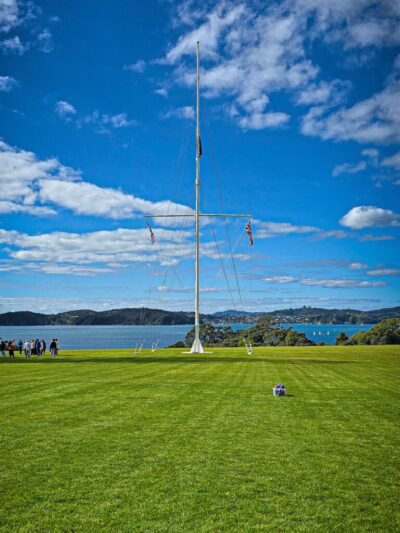
But the flagstaff has an even more interesting connection to New Zealand’s history. Just a few metres away is where the Treaty of Waitangi was signed in 1840, making this small area of the grounds the setting for some of the country’s most important historical events.
Our guide explained the story behind the flags and why they mattered at the time, which was another great example of how much more interesting Waitangi becomes when you have someone bringing the history to life.
Fun fact: The United Tribes flag was actually chosen before New Zealand had a formal government or national flag — so this wasn’t just about choosing a design; it was part of Māori leaders establishing their own identity and authority.
4. Māori Cultural Performance
Even though Waitangi Treaty Grounds is such an important historical place, I have to admit that this was the part of the visit I was looking forward to the most. I’ve always been fascinated by Māori culture, and getting to experience a traditional Māori cultural performance in person was absolutely unforgettable.
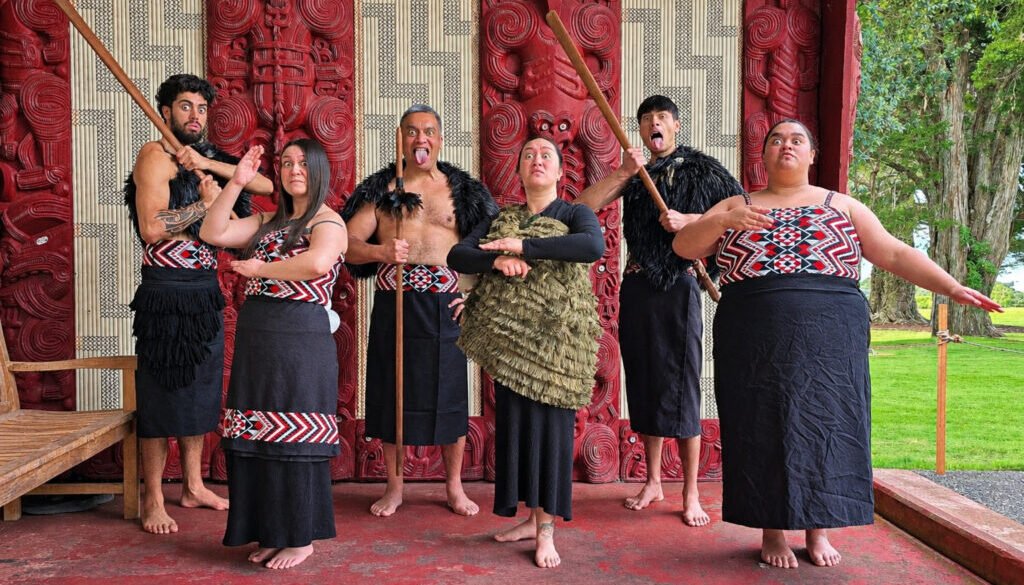
Before you even enter the beautiful Māori meeting house, Te Whare Rūnanga, the group is asked to choose someone to act as the chief or spokesperson. And then things get very dramatic!
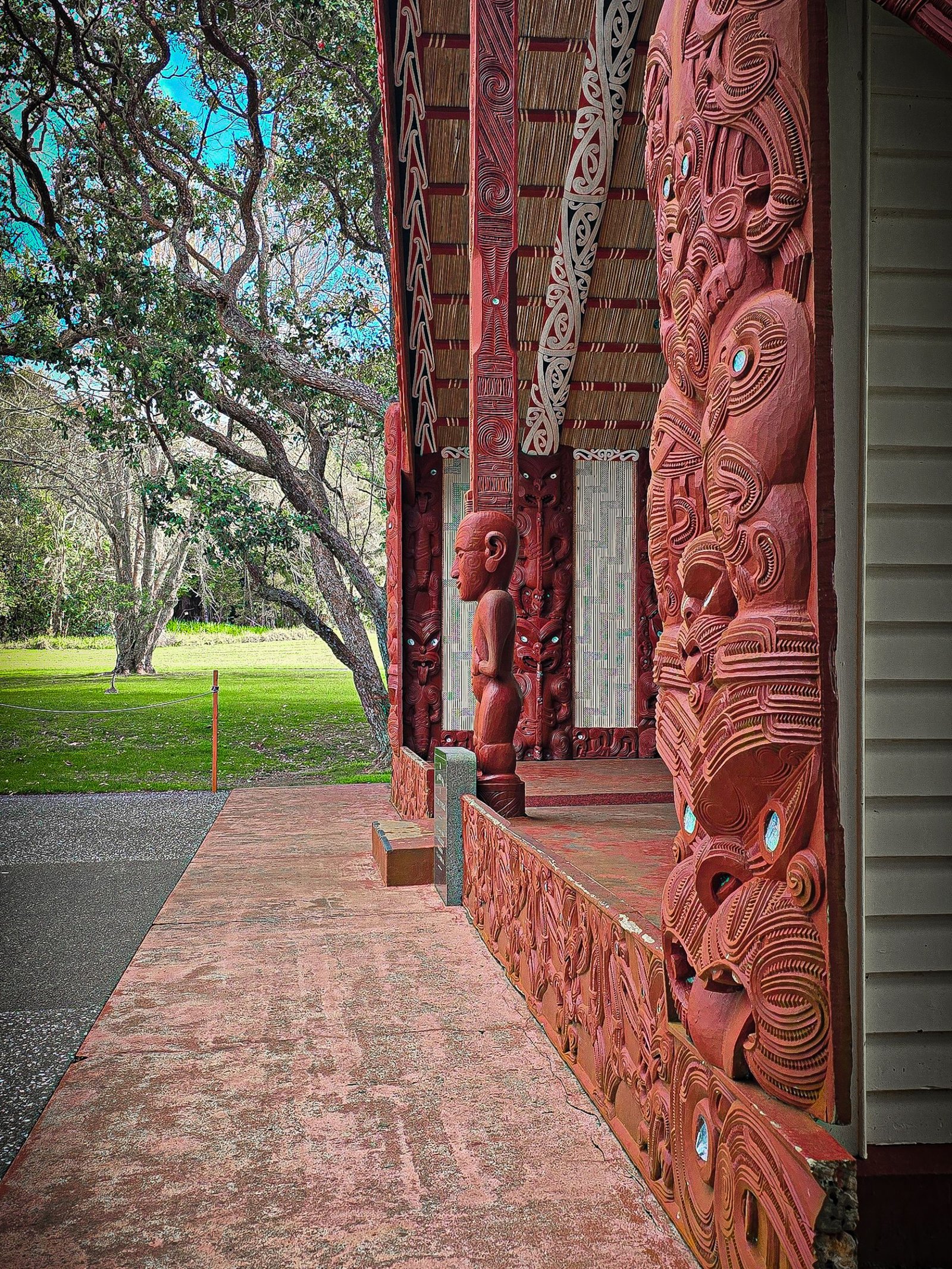

As a part of your ticket, you will be booked into a cultural performance that you really can’t miss at Waitangi
One of the Māori performers comes out and approaches the group in a traditional wero, a ceremonial challenge that forms part of the Māori pōwhiri (welcome). He moves towards the chosen spokesperson while chanting and making powerful gestures, creating a surprisingly intense moment. A symbolic token is then offered to the visitor’s representative, who carefully accepts it, signalling that the visitors come in peace.
Once everyone is welcomed inside Te Whare Rūnanga, the performance continues with waiata (songs), poi and the haka, while the performers explain the meaning behind some of the traditions.


The cultural performance at Waitangi Treaty Grounds is such a special experience
I absolutely loved this experience. And this wasn’t actually my first Māori cultural performance — I had previously visited Mitai Māori Village in Rotorua, which was also an amazing experience.
But honestly, the performance at Waitangi felt even more special to me. Maybe it’s because it takes place at Waitangi Treaty Grounds, such an important place in New Zealand’s history, or maybe it was simply the beautiful atmosphere of Te Whare Rūnanga. Whatever the reason, this experience just hit differently.
There was something incredibly special about sitting inside such a beautiful meeting house, watching these traditions being performed and knowing that you’re experiencing a small part of a culture with such a deep connection to this land.


If you’re still unsure about visiting Waitangi Treaty Grounds, let this be the selling point
If you’re interested in Māori culture, don’t miss this. And even if you’ve never been particularly interested in cultural performances before, I’d still recommend giving it a chance — it was easily one of my favourite experiences in New Zealand.
5. Visit the Treaty House
After the Māori cultural performance, I crossed over to the building that gives Waitangi its name: the Treaty House.
At first glance, it might just look like a beautiful old colonial house. But then you learn what actually happened inside its walls — and suddenly it feels very different.
This was the home of James Busby, the British Resident in New Zealand, and it became the setting for some incredibly important moments in the country’s early history. In 1834, New Zealand’s first national flag was chosen here. In 1835, the Declaration of Independence of the United Tribes of New Zealand was drafted in the house.
And then, just a few years later, the Treaty of Waitangi was given its final preparations here before being taken outside and presented to Māori chiefs.
What I found fascinating is that the Treaty wasn’t actually signed inside the Treaty House. It was signed just outside, in the grounds between the Treaty House and Te Whare Rūnanga — the exact area where I stood for the cultural performance.
That really put things into perspective for me. You’re not just visiting a historic building; you’re standing in the very place where some of the most important decisions in New Zealand‘s history unfolded.


6. Learn About Māori War Heroes at Te Rau Aroha Museum
I’ll be honest — I wasn’t expecting to find a museum dedicated to Māori soldiers when I visited Waitangi, but Te Rau Aroha Museum of the Price of Citizenship ended up being one of the highlights of my visit.
Interestingly, our guide told us that this museum is often somewhat forgotten in the shadow of Waitangi’s other attractions and museums. But he also told us it was his personal favourite — and after visiting it, I completely understand why.
The museum tells the stories of Māori who served in wars throughout New Zealand’s history, with a particular focus on the 28 (Māori) Battalion during World War II and the A Company soldiers from Northland. What I liked most is that it doesn’t just focus on battles and military history; it tells the personal stories of the soldiers and their families, making everything feel much more human.
One story that really stood out to me was the story behind the museum’s name. During World War II, children from Māori schools across New Zealand raised money to send a mobile canteen called Te Rau Aroha to Māori Battalion soldiers serving overseas. The children did odd jobs, ran stalls and organised concerts to raise the money needed to buy it.
The canteen followed the soldiers through the war, providing them with little comforts from home. It was even attacked during the war and still bears its battle scars today.
For me, this is exactly the kind of museum that stays with you. You don’t just walk away knowing more facts — you leave thinking about the people behind them.
7. Explore Te Kōngahu Museum of Waitangi
One of my favourite parts of the Waitangi Treaty Grounds was the Te Kōngahu Museum of Waitangi. If you want to understand what happened at Waitangi and why the Treaty remains so significant today, make sure you leave plenty of time to explore it.
What I loved most was how much history the museum manages to explain without ever feeling overwhelming. There is a lot of information, but it’s presented in a way that makes it surprisingly easy to understand, even if your knowledge of New Zealand’s history is fairly basic.
Through videos, historical artefacts, interactive displays and detailed timelines, the museum takes you through Aotearoa’s history before and after the arrival of Europeans, helping you understand the events that eventually led to the signing of Te Tiriti o Waitangi and what happened afterwards.
I particularly loved the timelines because they put everything into context rather than presenting the Treaty as one isolated event.
And honestly, I was surprised by how much I enjoyed it. It ended up being one of the best museums I’ve ever visited. If you’re interested in New Zealand’s history, don’t rush this one.
8. Explore the Grounds and Enjoy the Views
One of my favourite things about Waitangi Treaty Grounds was simply walking around the whole area. When I moved between the museums and historic buildings, I started to understand just how magical this place really is.
And perhaps what made it even more special was how quiet and uncrowded it was. Waitangi still feels like such a hidden gem, so you don’t have to fight your way through crowds or wait for the perfect moment to enjoy the surroundings.
Between the museums, you’ll find plenty of lush green spaces and beautiful ocean views that give you that classic “wow, I’m actually in New Zealand” feeling. I honestly think it’s worth slowing down and taking your time here rather than rushing from one attraction to the next.


Did you know that some of the trees around Waitangi Treaty Grounds were planted by famous visitors? As you wander around, you’ll find trees planted by notable figures, including the late Queen Elizabeth II. I loved coming across these little details as I explored the grounds — it’s almost like discovering tiny pieces of history that aren’t part of the main exhibitions.
And of course, you can’t talk about exploring Waitangi without mentioning its incredible location. The grounds are located in the Bay of Islands, in Northland — New Zealand’s only subtropical region. It has warm and relatively mild weather, so make sure you put it on your New Zealand itinerary instead of just putting up with the cold weather down south.
9. Enjoy a Māori Hāngī Dinner and Cultural Experience
If you want to make your visit extra special, you can also book a hāngī dinner and cultural experience at Waitangi Treaty Grounds.
This is something that many visitors probably miss — including me. I had no idea you could actually have dinner there! But if I’m ever back in the Bay of Islands during summertime, you bet I’m doing it.
The combo ticket allows you to explore the museums and grounds during the day, but then takes the experience up an extra notch in the evening. At 5:30pm, you’ll get to see the hāngī being uncovered after hours of cooking in an underground oven, followed by a Māori performance. The evening finishes with a buffet dinner featuring meat, vegetables, bread, salad and steamed pudding for dessert.
Since I completely missed this experience myself, I can’t tell you whether the food is any good… but judging by how professional and committed the team at Waitangi Treaty Grounds is in general, I have a feeling it won’t disappoint.
And honestly, how cool would it be to experience Waitangi Treaty Grounds after dark, once everyone else has gone home? That alone sounds like a pretty memorable way to end the day.
How Long Do You Need at Waitangi Treaty Grounds?
Before visiting Waitangi Treaty Grounds, I spoke to a friend who had been there a few days earlier. She warned me not to underestimate how much time you need because there is so much to see, and she said the museums were so good that they would easily keep my attention for hours.
I remember wondering whether I’d feel the same. Well, I can confirm she was absolutely right!
I’d recommend reserving at least 4 hours for your visit to Waitangi Treaty Grounds. There are several museums and historic sites to explore, and you’ll also want to give yourself time to simply walk around the grounds and enjoy the beautiful surroundings.
If you like to take your time in museums and actually read through the exhibitions rather than just walking through them, I’d say half a day is the perfect amount of time. I definitely wouldn’t recommend trying to squeeze Waitangi into a quick couple of hours — there’s simply too much to see, and the museums deserve your attention.
💡 DID YOU KNOW? Your ticket to Waitangi Treaty Grounds is actually valid for two consecutive days! That means you don’t have to squeeze everything into a single visit. The grounds have so much to see that you can spread your visit over two days if you want to take your time.
How Much Does Waitangi Treaty Grounds Cost?
To be completely transparent with you, I visited the Waitangi Treaty Grounds on a complimentary ticket because I was creating content about my experience there. That said, even if I had paid the regular admission price myself, I would still feel that Waitangi Treaty Grounds is totally worth the money.
It’s definitely not the cheapest museum you’ll come across in New Zealand. But considering you’re visiting the birthplace of the nation and there are several hours’ worth of things to see and do, I think the price is completely justified.
For international visitors, an adult ticket currently costs NZ$74 (until 30 September 2026), increasing to NZ$78 from 1 October 2026. Children aged 0–12 can enter for free when accompanied by a paying adult.
And your ticket includes quite a lot. Admission gives you access to the entire Waitangi Treaty Grounds, including Te Kōngahu Museum of Waitangi, Te Rau Aroha Museum, the Treaty House, Te Whare Rūnanga and the giant ceremonial waka. It also includes a 50-minute guided tour and a 30-minute Māori cultural experience, so you’re getting much more than just entry to the grounds.
And remember what I mentioned earlier? Your ticket is valid for two consecutive days. I think that makes it a pretty good deal — especially if you want to take your time exploring everything.
How to Get to Waitangi Treaty Grounds
From Paihia
If you’re staying in Paihia, you can easily walk to Waitangi Treaty Grounds. That’s what I did and it took me roughly 20–30 minutes. You’ll walk alongside the coast, so it’s such a pleasant way to get there if the weather is good.
You can also take a taxi or drive yourself, with parking available at the Waitangi Treaty Grounds.
From Russell
If you’re staying in Russell, you’ll first need to cross the Bay of Islands by ferry to Paihia. From there, you can walk, drive or take a taxi to Waitangi.
From Kerikeri
Waitangi is around a 30-minute drive from Kerikeri, making it an easy addition to a Northland itinerary if you’re exploring the area by car.
From Auckland
If you’re travelling from Auckland, Waitangi is roughly a 3.5-hour drive, depending on traffic and your route. You can visit as part of a longer Northland road trip, but I wouldn’t recommend making the journey all the way from Auckland just to spend a couple of hours at Waitangi. If you have time, it’s better combined with a few days exploring the Bay of Islands and Northland.
My tip: if you’re travelling around the Bay of Islands, staying in Paihia is probably the easiest option. By the way, I can truly recommend the Peppertree Lodge! It’s such a clean and cozy place, and you’ll be close to Waitangi Treaty Grounds as well as many of the other attractions and tours in the area.
Best Time to Visit Waitangi Treaty Grounds
Thanks to its location in Northland, Waitangi Treaty Grounds can be visited year-round. While the warmer months from December to March generally offer the best chance of sunny weather, I wouldn’t rule out visiting during the winter.
I visited Waitangi in August, which is winter and also part of the low season, and I was lucky enough to have a gorgeous, sunny day. The weather was perfect for walking around the grounds, and the quieter season meant I could explore without dealing with big crowds. So while summer may give you better odds of warm, sunny weather, my own experience showed me that winter can be a great time to visit too.
If you want to experience something truly special, you should visit on the 6th of February — Waitangi Day, New Zealand’s national day. This is when the country commemorates the signing of Te Tiriti o Waitangi, and the grounds host major celebrations and events. It’s a fascinating time to visit if you specifically want to experience Waitangi Day, but expect the grounds to be much busier than usual.
💡 DID YOU KNOW? Waitangi Treaty Grounds are completely free to visit on Waitangi Day, 6 February! The main downside is that the museums and historic buildings are closed on the day, so you won’t be able to explore the exhibitions or go inside the buildings. However, if you want to experience the Waitangi Day celebrations and save a little money while travelling around New Zealand, visiting on 6 February could be a great option.
If you’re visiting the Bay of Islands, definitely put Waitangi Treaty Grounds on your itinerary. And if you’re still unsure whether you should explore this part of New Zealand, believe me: you should! So many tourists come all the way to New Zealand and never make it north of Auckland, which I honestly think is such a mistake. There is so much to see and experience up here, and Waitangi is just one of the places that makes the journey north so worthwhile.
Planning your New Zealand adventure? Check out my other posts to help you make the most of your trip!

Was this post helpful? If so, please consider using the affiliate links below. I’ll earn a small commission at no extra cost to you. Your support means a lot! 👇🏼
- Skyscanner: Find the cheapest flights 🛫
- Booking.com: Find the best accommodations, flights & car rentals 🛏️
- Hostelworld: Find the best hostels 📍
- AirHelp: Get paid if your flight was delayed or cancelled 💰
- Omio: Find the best transportation options anywhere in the World 🚆
- 12goAsia: Book transportation in Asia 🚌
- Trip.com: Get the best discounts on flights, hotels & car rentals 💰
- Get Your Guide: Book the best tours & buy entrance tickets 🎫
- Tripadvisor: Find other travelers’ opinions ✍🏼
- Rental Cars: Rent a car for your trip 🚗
- Discover Cars: Get up to 70% discount on car rentals 💰
- Revolut: Stop paying for exchange fees abroad 💳
- Surfshark: Get a discount on your VPN 💻
- Klook: Get 10% discount on Klook 🤑
- IATI Insurance: Get 5% discount on your travel insurance 🔒
- Worldpackers: Find voluntering opportunities in more than 140 countries 🌎
- Viator: Find tours around the World 🎟️
- Osprey: Find the best backpacks on the market 🎒
- LARQ: Get a self-cleaning bottle that kills viruses and germs 🦠
- TravelSpend: 50% discount on the best budget-tracking app 💰